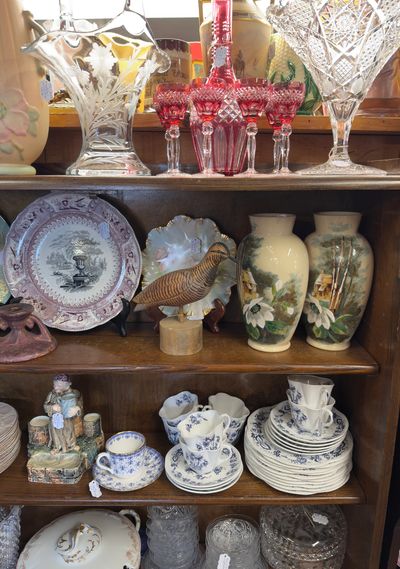
If you are trusting an estate sale company with a lifetime of belongings, it is reasonable to ask:
“How do you know what everything is worth?”
An estate may contain hundreds—or thousands—of different items, including:
Furniture • Jewelry • Artwork • Tools • Coins • Collectibles • Kitchenware • Vehicles
One item may have cost $5,000 when it was new. Another may have cost $10 fifty years ago and now be collectible. A third may have originally been expensive but have limited resale demand today.
Professional estate sale pricing requires more than guessing, relying on the original purchase price or choosing the highest number found online.
More Splendid Things provides professional estate sales and estate liquidation throughout Ocala, Marion County, and surrounding Central Florida communities.
Good Estate Sale Pricing Begins With Research—and Ends With the Real Market.
Have an Estate to Evaluate?
Schedule a Complimentary Estate Consultation
What Determines an Estate Sale Price?
Estate sale prices are generally influenced by several factors:
Maker
Age
Condition
Rarity
Materials
Completeness
Current Demand
Local Buyer Interest
Selling Method
Available Time
The same item may have different values depending on whether it is sold through:
- A local estate sale
- An auction
- Consignment
- An online marketplace
- A specialty dealer
- A private sale
The Best Price Is Not Always the Highest Price Someone Has Ever Asked.
It is the price that gives the item a realistic opportunity to sell in the appropriate marketplace and timeframe.
Estate Sale Price Is Not Retail Price
This is one of the most important concepts in estate sale pricing.
Suppose a sofa originally cost:
$4,000
That does not mean its current estate sale value is $4,000.
It also does not automatically mean the sofa should be priced at $2,000 because it is “half price.”
The resale market does not work that way.
Today’s value may depend upon:
Maker • Style • Age • Condition • Size • Current Demand • Local Market
The original receipt can provide useful information.
It is evidence of what was paid—not necessarily what the item is worth today.
Estate Sale Price Is Not Insurance or Replacement Value
Insurance appraisals may use replacement value. That can be very different from the price an item would bring in the secondary market.
A piece may have an insurance replacement value of several thousand dollars while its realistic resale value is substantially lower.
Different valuations answer different questions.
Insurance valuation asks:
“What might it cost to replace this item?”
Estate sale pricing asks:
“What will today’s buyer realistically pay?”
Asking Price Is Not Selling Price
One of the most common estate sale pricing mistakes is treating an online listing as proof of value.
You may search for an item and find what appears to be the same piece listed for:
$1,200
But that item may have been listed for months or years without selling.
Anyone can ask almost any price online.
Whenever possible, actual completed sales are more useful than asking prices. Even then, the sale must be interpreted carefully.
How Do You Compare Similar Items?
Suppose you find an apparently identical item that sold for $750.
Before pricing yours at $750, ask:
Was it made by the same company?
Is it the same size?
Is it in comparable condition?
Is it the same age?
Does it use the same materials?
Is it the same model or version?
Was it sold locally or nationally?
Was shipping included?
Was it professionally restored?
Was it sold through the same type of marketplace?
A comparable sale is useful only when it is genuinely comparable.
Similar Is Not Always the Same.
Condition Can Change Estate Sale Value
Condition can have a dramatic effect on resale pricing.
Consider two otherwise identical items.
Item A
Excellent condition.
Original finish.
Complete.
Clean.
No damage.
Item B
Cracked.
Repaired.
Missing parts.
Heavy wear.
Same maker.
Same age.
Same model.
The two items may have very different values.
Pricing should account for:
Damage
Repairs
Wear
Missing Parts
Stains
Odors
Functionality
Completeness
Original Finish
Condition is part of the value—not a footnote.
Current Demand Matters More Than What Someone Paid
This can be difficult for families.
A china set may have cost thousands of dollars. A large traditional dining suite may have been the finest furniture in the home. A collection may have been extremely popular in the 1990s.
But today’s buyer determines today’s market.
Sentimental importance does not automatically create resale demand.
That does not make an item less meaningful. It simply means sentimental value and market value are different.
How More Splendid Things Approaches Estate Sale Pricing
Estate sale pricing may involve several levels of evaluation.
Level 1 — Everyday Household Merchandise
Many ordinary household items can be priced efficiently using estate sale experience and current local demand.
Examples include:
Kitchenware • Linens • Books • Décor • Everyday Furniture • Household Goods
Level 2 — Branded or Collectible Merchandise
These items may require additional identification and comparison.
Examples include:
Pottery • Glass • Designer Furniture • Vintage Toys • Advertising • Collectibles
Level 3 — Potentially Significant Merchandise
These items may require deeper research, specialist input or another selling method.
Examples include:
Fine Art • Fine Jewelry • Coins • Significant Antiques • Specialty Collections • Vehicles
Not every $10 item needs 30 minutes of research.
But a potentially $1,000 item deserves more attention than a $10 kitchen utensil.
How Is Jewelry Priced at an Estate Sale?
Jewelry may require consideration of:
- Metal
- Weight
- Maker
- Hallmarks
- Gemstones
- Diamond characteristics
- Design
- Age
- Condition
- Current demand
Fine jewelry and costume jewelry should not automatically be treated the same way.
Certain signed costume jewelry can be collectible. A piece that looks expensive may turn out to have modest resale value. A small or understated piece may contain valuable materials or have an important maker.
Examine First. Price Second.
How Is Sterling Silver Priced?
Sterling silver may have more than one type of value.
Precious-Metal Value
This may be based partly on silver content, weight and current metal prices.
Collector or Decorative Value
This may depend upon:
Maker • Pattern • Age • Form • Rarity • Condition • Demand
Some sterling pieces may be worth more intact than they would be as scrap.
Identification matters before deciding whether to sell, group or separate an item.
How Are Coins Priced?
Coin value can depend upon:
Date • Mint Mark • Condition • Rarity • Metal Content • Collector Demand
Two coins that look nearly identical to an inexperienced observer can have dramatically different values.
Important information may be found on:
The Date
The Mint Mark
The Denomination
The Condition
The Edge
The Metal
And:
Do Not Clean Old Coins.
Cleaning can reduce collector desirability and may damage the surface.
How Is Fine Art Priced?
Artwork may require investigation into:
- Artist
- Signature
- Medium
- Size
- Subject
- Condition
- Provenance
- Gallery labels
- Exhibition history
- Comparable sales
A beautiful painting is not automatically valuable.
An important painting is not always obvious.
Research may also need to distinguish between:
Original Works
Limited Editions
Prints
Reproductions
Decorative Art
Artwork should be identified before it is priced.
How Is Furniture Priced?
Furniture is one of the most misunderstood estate sale categories.
Potential pricing factors include:
Maker
Designer
Style
Construction
Materials
Age
Condition
Size
Current Decorating Trends
Local Demand
Large furniture also has a practical limitation:
Someone has to have room for it—and a way to move it.
That affects the buyer pool.
A high-quality piece may still require realistic pricing if it is oversized, difficult to transport or out of step with current demand.
How Are Antiques Priced?
Age is only one factor.
Potential value may depend upon:
Period • Maker • Quality • Rarity • Condition • Provenance • Current Demand
Some antique categories remain desirable. Others sell for significantly less than they did decades ago.
Old does not automatically mean valuable.
Professional estate sale pricing should reflect today’s market rather than assumptions based only on age.
How Are Collectibles Priced?
Collectible markets can change quickly.
Demand for the following may rise or fall over time:
Vintage Toys
Advertising
Pottery
Glass
Records
Sports Memorabilia
Holiday Decorations
Figurines
Old price guides can become outdated.
Current market information, condition, completeness and buyer interest matter more than a historical price printed years ago.
How Are Tools Priced?
Tools may be priced according to:
Brand • Model • Condition • Completeness • Age • Current Demand
Professional-grade and specialty tools may deserve additional research.
A garage full of tools should not automatically be priced as:
“Everything $5.”
Brand names, model numbers, accessories, cases and working condition can all affect value.
How Are Vehicles Priced?
Vehicles require their own evaluation.
Potential factors include:
- Year
- Make
- Model
- Mileage
- Condition
- Maintenance
- Options
- Title
- Documentation
- Market demand
- Comparable sales
This may include:
Cars • Trucks • Golf Carts • Motorcycles • Trailers • Boats • Recreational Vehicles
Vehicles should not be treated like ordinary household merchandise.
How Are Farm and Equestrian Items Priced?
Ocala-area estates may contain:
Saddles
Tack
Horse Trailers
Tractors
Implements
Farm Equipment
Workshop Equipment
These categories may require specialty research.
A maker, model number, serial plate or maintenance record can substantially improve identification and pricing.
Should Everything Be Priced at the Maximum Possible Value?
No.
Suppose research suggests an item might eventually sell online for $500.
Selling it online may require:
Months of Waiting
Packing
Shipping
Returns
Fees
National Marketing
A local estate sale operates within a much shorter selling window.
The appropriate estate sale price may be different.
Marketplace and Timeframe Matter.
Why Not Price Everything High and Negotiate?
Excessive pricing can hurt the entire sale.
Customers notice.
If shoppers believe everything is dramatically overpriced, they may:
Stop Buying
Leave Early
Skip Future Sales
The objective is not to put impressive numbers on price tags.
The objective is to price merchandise appropriately for the market and selling period.
Why Not Price Everything Cheap and Sell Out?
The estate deserves better than unnecessary underpricing.
A packed house disappearing in three hours is not automatically evidence of a successful sale.
If merchandise could reasonably have generated substantially more:
Selling fast is not the same as selling well.
The objective is balance:
Protect Value
Attract Buyers
Encourage Sell-Through
Use the Available Time Wisely
How Do Estate Sale Discounts Work?
Estate sales have limited selling periods.
That is why pricing strategy often considers the expected discount schedule.
A company may begin at an appropriate initial price and progressively discount merchandise as the sale moves toward completion.
The general objective is:
Early Sale
Protect value.
Later Sale
Increase sell-through.
The specific discount strategy should be discussed before the sale.
Can Certain Items Be Excluded From Discounts?
Depending upon the estate and agreement, selected merchandise may be handled differently.
This could potentially include:
Vehicles
Fine Jewelry
Significant Artwork
Certain Collections
Consignment Items
The strategy should be determined before sale day.
When Is an Estate Sale Not the Best Marketplace?
Sometimes research reveals that an item may deserve another selling method.
Potential options can include:
Auction
For certain specialty merchandise, collections, vehicles or equipment.
Consignment
For selected items that may benefit from additional selling time.
Another Specialized Marketplace
When a specific buyer audience is required.
Research Should Influence Where Something Is Sold—not Just Its Price.
How Do Estate Sale Companies Avoid Missing Valuable Items?
No system can guarantee that every object in a large estate will turn out exactly as expected.
But a professional process can help identify items that deserve additional attention.
We look for:
Signatures
Maker Marks
Labels
Hallmarks
Model Numbers
Serial Numbers
Materials
Construction
Original Boxes
Documentation
And most importantly:
Things That Do Not Look Ordinary.
Experience helps identify what deserves a second look.
What Documentation Helps With Estate Sale Pricing?
Keep documentation with the merchandise whenever possible.
Useful information may include:
Receipts
Appraisals
Certificates
Original Boxes
Artist Information
Purchase Records
Manuals
Documentation can help with identification, authenticity, condition and research.
It does not guarantee a particular selling price, but it may provide important context.
What If the Family Disagrees With an Estate Sale Price?
Ask why the item was priced that way.
The family may have information the estate sale company does not have, such as:
A Receipt
An Artist History
A Maker Name
Provenance
A Restoration Record
Share that information.
Good pricing benefits from good information.
But remember:
What someone paid is not necessarily what the resale market will pay today.
Questions to Ask an Estate Sale Company About Pricing
Before hiring an estate sale company, ask:
- How do you determine estate sale prices?
- What research resources do you use?
- Do you review completed sales?
- How do you handle unfamiliar items?
- How do you price jewelry?
- How do you price coins?
- How do you price artwork?
- What happens if you discover something valuable?
- Do you offer auction options?
- Do you offer consignment?
- How are discounts determined?
- Can certain items be excluded from discounts?
- Who has authority to negotiate?
- How do you handle offers?
- What happens to valuable unsold items?
Frequently Asked Questions About Estate Sale Pricing
Do you price everything individually?
The appropriate pricing method depends upon the merchandise. Some items may be individually priced, while certain low-value merchandise may be grouped.
Do you use eBay to price estate sale items?
Online marketplaces can be one source of market information, but asking prices alone should not determine value. Completed sales and other relevant market information may be more useful.
Is an appraisal the same as an estate sale price?
No. A formal appraisal and an estate sale resale price can serve different purposes.
Can I tell you what I want for an item?
Share any information you have. The estate sale strategy should ultimately reflect current market conditions and the agreement between the client and company.
What if something is worth more than expected?
Potentially significant merchandise can be researched further and considered for an appropriate selling method, including an auction, consignment or specialty marketplace.
Why are some antiques worth less than they used to be?
Buyer preferences and collecting markets change over time. Age alone does not guarantee current demand.
How long does estate sale pricing take?
The timeline depends on the size of the estate, the amount of merchandise, the number of specialty items and the sale schedule. Everyday household goods may be priced efficiently, while jewelry, artwork, coins, vehicles and collections may require additional research.
Can estate sale prices change during the sale?
They can, depending on the agreed pricing and discount strategy. Many estate sales use an initial price followed by planned reductions to encourage sell-through.
What happens to items that do not sell?
The post-sale plan should be discussed before the sale. Options may include additional selling methods, consignment, auction, donation, removal or return to the client, depending on the agreement.
Good Estate Sale Pricing Is Not About Being High or Low
It is about being:
Informed.
Realistic.
Strategic.
Price too low and value may be lost.
Price too high and merchandise may not sell.
Research the items that need research.
Understand the market.
Use the appropriate selling method.
Then let buyers do what markets do:
Buy.
Schedule a Complimentary Estate Consultation
More Splendid Things
Estate Sales • Estate Liquidation • Auctions • Consignments
Serving Ocala, Marion County, The Villages and surrounding Central Florida communities
CALL NOW
REQUEST A CONSULTATION